
Doxycycline is an oral tetracycline antibiotic used for a wide range of bacterial infections, including some respiratory, urinary, skin, sexually transmitted, and atypical infections. It is supplied here as capsules containing doxycycline hydrochloride and is commonly offered in 100 mg and 200 mg strengths.
Review doxycycline strengths, pricing, and order details in one place before checkout.
Use the product page to confirm suitability, dosing information, and pharmacy terms.
For anyone searching for buy doxycycline information, the key points are not only availability but also whether the product fits the intended infection, dose plan, and safety profile. Because this antibiotic has important age restrictions, pregnancy warnings, food and medicine interactions, and course-completion requirements, the product page should be read as practical treatment guidance rather than a simple catalog listing.
What doxycycline is used for
Doxycycline is a broad-spectrum semisynthetic tetracycline antibiotic. It works by inhibiting bacterial protein synthesis, which helps stop susceptible organisms from multiplying and allows the infection to clear.
The medicine is used in adults and in children over 8 years old for selected infections when doxycycline is an appropriate choice. The brief supports use in conditions such as chlamydial infections, rickettsial infections, borreliosis, severe acne, respiratory infections, ENT infections, urinary tract infections, some gynecological infections as part of combination treatment, and several other doxycycline-sensitive bacterial illnesses.
It is also used in certain special clinical settings, including malaria prophylaxis and treatment or prevention regimens for uncommon but serious infections. Final selection depends on the diagnosis, local resistance patterns, and prescriber judgment where applicable.
- Active ingredient: doxycycline hydrochloride
- Dosage form: oral capsules
- Common strengths mentioned: 100 mg and 200 mg
- Not suitable for viral illnesses such as colds or flu
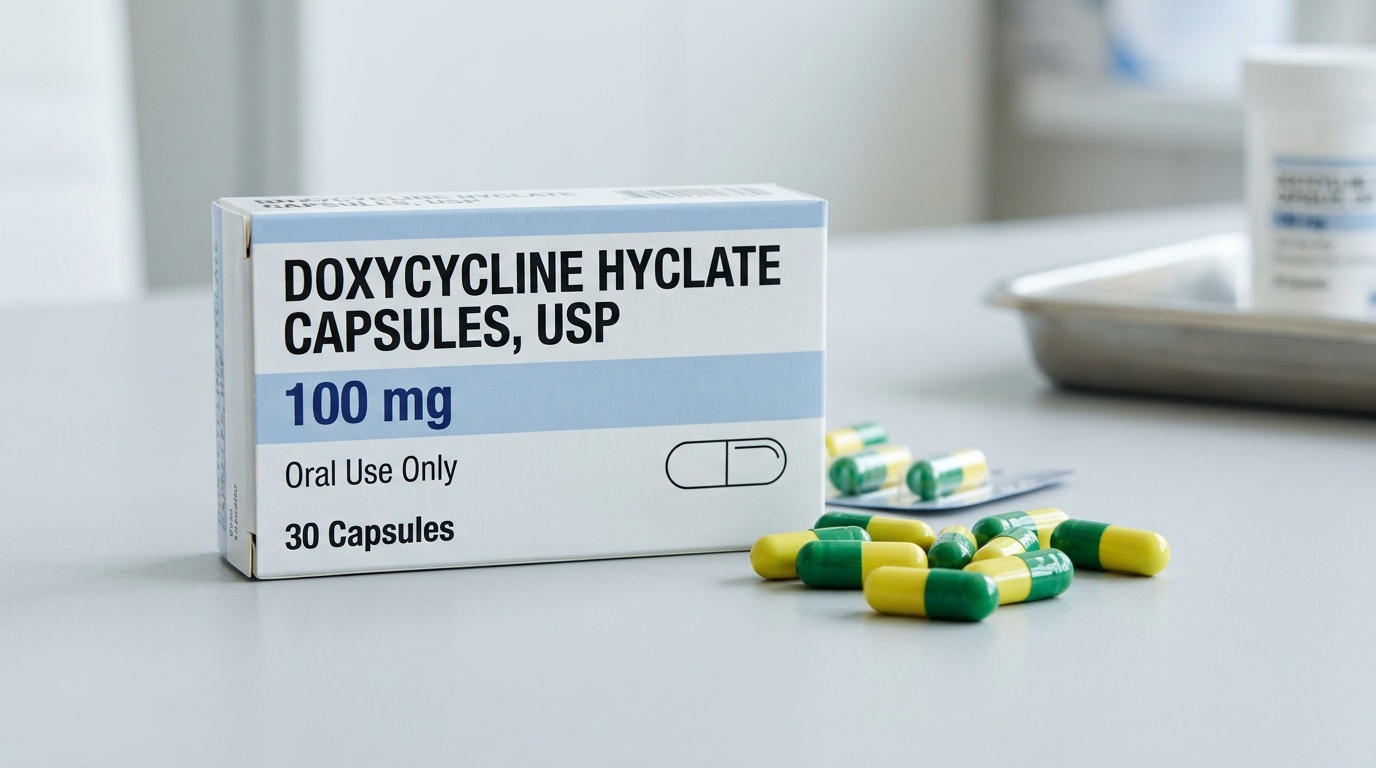
Doxycycline capsule strengths and product format
Doxycycline capsules are commonly listed in 100 mg and 200 mg strengths. These numbers identify the amount of active medicine in each capsule; they are product characteristics and should not be treated as interchangeable choices. The strength, quantity, and formulation on the order must match the prescription and the product label.
Before checkout, compare the active ingredient, capsule strength, pack count, manufacturer details, storage information, and the patient leaflet supplied with the product. The offer page should also make the current price, availability, delivery terms, and any prescription requirement clear.
- Confirm whether the listing is for 100 mg or 200 mg capsules.
- Check the number of capsules in the pack.
- Match the ordered product to the prescription and label.
- Review current checkout and delivery terms on the offer page.
What to confirm before ordering doxycycline
The correct doxycycline regimen depends on the diagnosis, age, clinical history, and the exact product prescribed. A commercial landing page cannot determine those factors, so it should help buyers verify the medicine rather than present a universal treatment schedule.
Use the listing to confirm the prescribed strength and pack size, then rely on the dispensing label, official product information, and the prescriber or pharmacist for administration and course duration. Do not substitute one strength for another or calculate a course from promotional copy.
Who should avoid doxycycline and what to monitor
Doxycycline is contraindicated during pregnancy and breastfeeding, in children under 8 years of age, in patients with hypersensitivity to tetracyclines, and in those with severe liver or kidney failure or porphyria. The pregnancy and lactation restriction is especially important because tetracyclines can affect fetal or infant bone and tooth development.
Extra caution is appropriate in mild to moderate hepatic or renal impairment, myasthenia gravis, and when other hepatotoxic medicines are being used. Anyone with a complicated medical history, recurrent infection, or uncertainty about suitability should seek clinician or pharmacist review before starting or restarting treatment.
The patient information leaflet and product labeling should be checked for full safety details, especially when treating sexually transmitted infections, prolonged acne, recurrent urinary symptoms, or travel-related prevention plans that may need diagnosis-specific follow-up.
- Do not use during pregnancy
- Do not use while breastfeeding
- Not for children under 8 years old
- Use caution with liver or kidney impairment
- Check suitability if taking other hepatotoxic medicines

Important interactions and practical precautions
Several common products can interfere with doxycycline absorption. Dairy products, antacids, and mineral supplements containing calcium, magnesium, iron, or aluminum should not be taken at the same time because they can bind the medicine and lower antibiotic exposure.
The brief also advises avoiding alcohol during treatment and for 48 hours after the last dose because it may lower effectiveness and add liver strain. Photosensitivity is another practical concern: skin can become more reactive to sunlight and tanning beds during treatment and for several days afterward.
Patients using hormonal contraception should review product guidance and ask a clinician or pharmacist whether additional protection is advisable in their situation. Ongoing severe abdominal pain, rash, jaundice, dark urine, or vision changes warrant prompt medical advice.
- Separate from mineral supplements and antacids
- Avoid taking with milk
- Limit sun exposure and tanning beds
- Use sunscreen during and shortly after treatment
- Avoid alcohol during treatment and for 48 hours after the course

What to check before you buy doxycycline online
When comparing options to buy doxycycline, focus on pharmacy legitimacy and product details rather than only the headline price. The listing should clearly show the strength, dosage form, pack information, active ingredient, and checkout terms, and it should provide access to product labeling or patient-use information.
Because antibiotic selection depends on the infection being treated, buyers should confirm that the intended regimen matches previous medical advice or current professional guidance. This matters especially for sexually transmitted infections, acne treatment courses, travel prophylaxis, or symptoms that could reflect a condition needing examination or testing.
Before checkout, review the listed price, delivery terms, storage instructions, and any pharmacy screening questions. If symptoms are severe, persistent, or not clearly bacterial, a clinician review remains the safer route than self-selecting an antibiotic.
- Check the capsule strength and pack details
- Review contraindications before ordering
- Look for patient information or labeling
- Confirm delivery terms on the offer page
- Do not use antibiotics casually for undiagnosed symptoms
Independent product information
For independent, product-specific safety information, review the U.S. National Library of Medicine’s doxycycline overview. It supports—not replaces—the labeling and clinical advice associated with your order.
Common questions about doxycycline
How quickly does doxycycline start working?
Absorption begins soon after dosing, and the brief states that a significant therapeutic effect is usually observed within 1 to 2 hours. Symptom improvement often takes 2 to 3 days, depending on the infection.
Can doxycycline be taken with food?
Yes. Taking it with food may reduce stomach irritation, but it should not be taken with milk or at the same time as antacids or mineral supplements that reduce absorption.
What are common side effects of doxycycline?
Common effects include nausea, heartburn, abdominal pain, diarrhea, rash, and increased sensitivity to sunlight. Severe reactions or signs of liver problems require prompt medical attention.
Content reviewed April 2026